
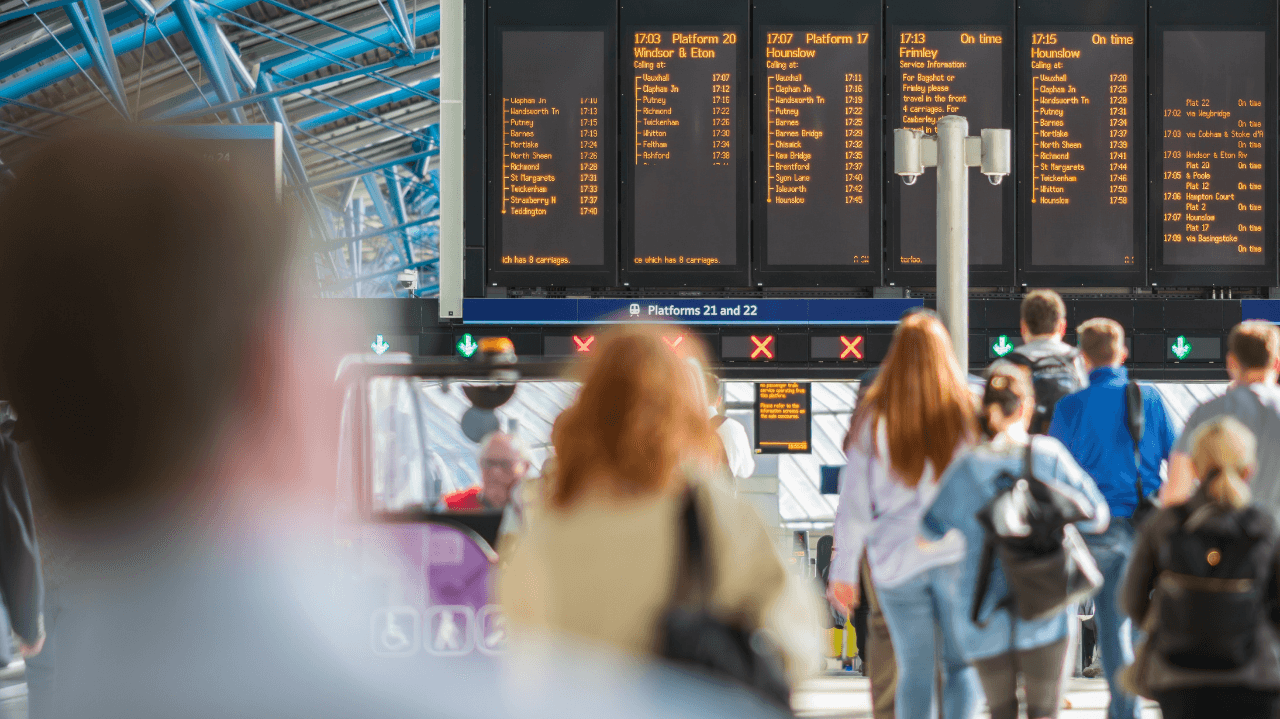
For many people, a train journey in Britain is an ordinary part of life. It may mean a daily commute into London, a weekend trip to another city, a journey to university, or a visit to family. Yet Britain’s railways represent much more than a way of getting from one station to another. They connect communities, support businesses, move goods, shape cities and remain closely tied to the country’s history and identity.
In 2026, that role is becoming even more significant. The latest figures from the Office of Rail and Road (ORR) show that passengers made 1.83 billion journeys across Great Britain between April 2025 and March 2026, the highest annual total since 1920. That represents a 6% increase from the previous year.
The numbers tell a story of recovery and renewed relevance, but the deeper story is about what the railway makes possible.
Connecting People to Opportunity
A railway does not simply connect two stations. It connects people to employment, education, healthcare, tourism and social opportunities.
For businesses, reliable rail connections can expand the practical distance between where people live and where they work. A professional can live outside a major city while accessing employment opportunities in a larger commercial centre. Businesses can also draw talent from a wider geographical area when transport links are strong.
This makes rail infrastructure part of the wider economic ecosystem. It influences where people choose to live, where companies establish offices and how easily regional economies interact with one another.
The scale of Britain's network reflects this role. In 2024-25, Great Britain's mainline railway included 2,589 stations and 9,785 miles of route, with approximately 100,000 people employed across the rail sector.
The Railway as a Social Network
There is also a human side to Britain's trains that statistics cannot fully capture.
A station can be a meeting point, a gateway to a city or a lifeline for a smaller community. For someone travelling to university, attending a medical appointment or visiting family, the railway can provide access to opportunities that would otherwise be more difficult to reach.
The ORR describes rail services as enabling people to access work, leisure, health, education and other essential services. That makes accessibility and passenger experience more than operational issues. They are part of a broader question about how inclusive and connected society can be.
This is particularly important as Britain considers how its transport network should serve an increasingly diverse population, including older passengers, people with disabilities and those living outside major urban centres.
More Than Passengers: The Railway Moves the Economy
Passengers are only one part of the picture.
Britain's railways also transport freight, including goods and materials that support industries across the country. In 2024-25, rail freight accounted for 16.5 billion net tonne kilometres, an increase of 5% from the previous year.
That means the railway contributes to supply chains that most passengers never see.
Behind the scenes, trains can move materials for construction, industrial products and other goods without placing everything onto Britain's roads. In this sense, rail is part of the country's wider logistics infrastructure.
The performance of rail therefore has consequences beyond passenger satisfaction. Delays, capacity constraints and infrastructure problems can affect businesses, workers and supply chains.
A Railway Facing Modern Expectations
Britain's railway is also being asked to do more in a changing environment.
Passengers increasingly expect simple ticketing, reliable information, accessibility and dependable services. Businesses expect infrastructure that supports productivity. Government and regulators are looking at efficiency, sustainability and value for money.
The challenge is significant because the railway is an enormous and complex system. In 2024-25, government support for Britain's railways totalled £21.6 billion, according to the Department for Transport's Rail Trends 2025.
At the same time, the railway is showing signs of improving productivity. The ORR reported 3% productivity growth in 2024-25, continuing the recovery seen since the pandemic.
This highlights an important lesson for any large infrastructure system: growth alone is not enough. Long-term value depends on how effectively resources, technology, people and infrastructure are managed together.
The Future of Britain's Railway
The future of Britain's railways will not simply be about faster trains. It will be about creating a system that is more reliable, accessible, efficient and responsive to changing patterns of work and travel.
Passenger behaviour itself is changing. The latest annual figures show that off-peak journeys increased from 799 million to 844 million between 2024-25 and 2025-26. Meanwhile, the Elizabeth line recorded 257.4 million journeys during the same period, demonstrating how new infrastructure can significantly influence travel patterns.
The opportunity is therefore broader than building more tracks or adding more services. It involves understanding how infrastructure, technology, customer expectations, workforce planning, sustainability and economic development interact.
For businesses and policymakers alike, this requires a long-term approach to resilience, investment and operational efficiency.
A Journey That Connects More Than Places
Britain's railway is ultimately a reflection of Britain itself. It carries commuters and tourists, students and families, goods and ideas. It connects major economic centres with smaller communities and links today's economy with a railway heritage stretching back generations.
That is why Britain's trains are more than just trains.
They are part of the infrastructure that allows people to participate in the economy and in society. They influence where businesses grow, where people live, how communities remain connected and how the country moves forward.
The next chapter of Britain's railway will therefore not be measured only by how quickly a train reaches its destination. Its real success will be measured by how effectively the network helps people, businesses and communities reach their own destinations.