Every unmarked swan in England's open waters belongs to the King, and once a year the palace sends rowing boats to count them. This is Britain's strangest royal tradition, and there's a smart idea hiding inside it.
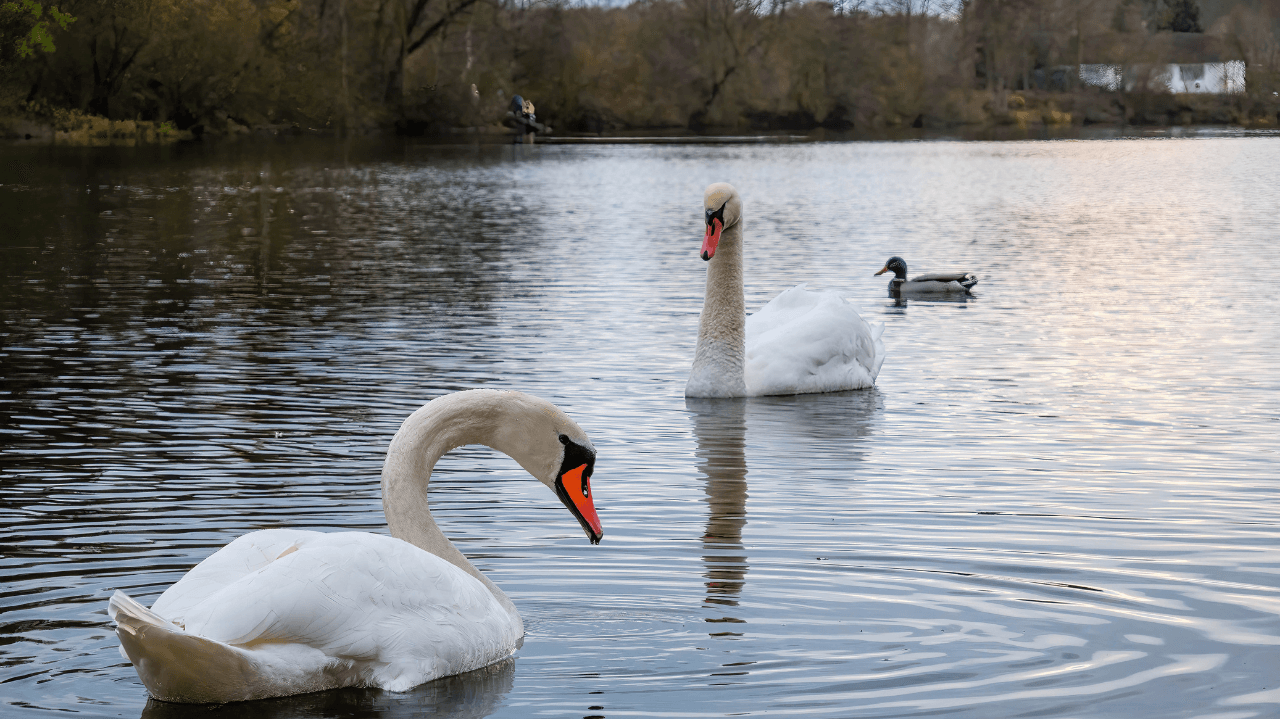
Here is a fact that sounds made up but is completely true: the King of England owns every unmarked mute swan swimming in open water in the country. Not just the ones near the palace. If a swan is floating on an English river and nobody has marked it as theirs, it belongs to King Charles III. This right goes all the way back to the twelfth century, and it even comes with an official title that sounds straight out of a storybook: Seigneur of the Swans, the Lord of the Swans.
And because Britain is Britain, this is not just an old rule gathering dust. It comes with a job, a uniform, a ceremony, and paperwork.
Why the King owns the swans in the first place
The honest answer is that swans used to be food. In medieval England, swan was a luxury dish, the showpiece of royal feasts, and young swans were fattened up for Christmas dinners. Owning swans meant owning wealth. So the Crown claimed all of them, and gave swan-keeping rights to a lucky few, who marked their birds to prove which ones were theirs. Anything without a mark stayed with the King. The rules were strict too: back then, even stealing swan eggs could be punished with a year and a day in prison.
Two old trade guilds, the Vintners and the Dyers, were given their own swan rights by the Crown in the 1400s, and believe it or not, they still hold them today. A wine merchants' club and a fabric dyers' club from the Middle Ages are still, in 2026, official co-owners of the swans on the River Thames. Nobody eats swan anymore, but nobody ever cancelled the deal either. Cancelling old traditions is not really the British way.
Swan Upping: the royal swan count that still happens every July
Which brings us to the ceremony itself. Every year, in the third week of July, a small fleet of wooden rowing boats sets off up the Thames for five days. On board are the Swan Uppers in bright red uniforms, led by the King's Swan Marker, a real royal job held for more than thirty years by a man named David Barber. When they spot a family of swans, they shout "All Up!" and the boats move in. Each swan is gently lifted out of the water, weighed, measured and checked for injuries, usually from fishing hooks and lines. The guilds' young swans get ID rings, the King's swans stay unmarked, and every single bird is written down before being released.
It started as a stock count for the royal kitchen. Today it is animal protection with costumes, and it genuinely works. In the 1980s, the swan numbers on this stretch of river crashed, at one point to just seven birds. The yearly records helped trace the problem to lead fishing weights, the lead was banned, and the swans came back. This year's count finished just last month, with the Swan Marker reporting healthy, steady numbers. Schoolchildren line the riverbanks to watch. The late Queen herself came along in 2009. It is, without question, the best-dressed bird count on Earth.
What a 900-year-old bird count teaches modern business
Now, you could file all this under strange British traditions and move on. But look at what Swan Upping really is, once you take away the red jackets. An owner keeps a list of what they own. Once a year, trained people physically check every single item: count it, weigh it, inspect its condition, note who it belongs to, and look into anything that seems off. And when the numbers dropped, the records showed exactly why, so the problem was fixed before everything was lost.
That is an audit. A real, physical, yearly audit that has been running since the Middle Ages, possibly the oldest one still happening anywhere in the world. The palace did not keep its swans for nine centuries by assuming they were fine. It kept them by counting them, every single year, even in the good years. Especially in the good years, because the counts from the good years are what explain the bad ones.
Most businesses only learn the value of counting things after something goes missing: stock, cash, customers, sometimes worse. The British Crown worked out the better order of doing things 900 years ago. Know what you own. Check it regularly. Write it down. Look into anything odd. Whether it is swans on a river or stock in a warehouse, the idea has not changed since men first rowed up the Thames shouting at birds.
So the next time a yearly audit or a stock count feels like a boring ritual, remember that England has been doing exactly that with actual birds since the twelfth century, in full costume, with the King's blessing. Rituals do not survive nine hundred years unless they work. All up.