


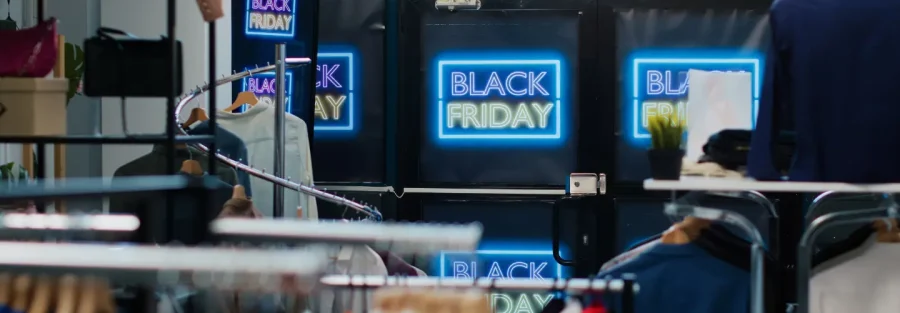
British retail has never been more interesting to watch. In the same week of February 2026 you could read about River Island planning the closure of 33 stores while John Lewis reported its strongest in-store sales growth in six months. Quiz entered administration. Oliver Bonas is opening new locations. Poundland is shrinking. Crew Clothing is expanding.
This is not a sector in decline. It is a sector of selection, where winners and losers are being sorted quickly. The retailers that understand how physical stores and e-commerce feed each other are the ones pulling ahead.
Retailers expanding vs restructuring in 2026
Retailers expanding in 2026 Retailers restructuring in 2026
| Oliver Bonas | River Island |
| Crew Clothing | Quiz |
| Antler | Poundland |
| Garage | |
| Fabletics |
Where British retail stands in February 2026
Key UK retail indicators (January and February 2026)
British Retail Consortium, January 2026
- Total retail sales up 2.7 percent year on year
- In-store sales growing at their fastest pace in six months
- Food sales up 3.8 percent
- Non-food sales up 1.7 percent
- Like-for-like sales up 2.3 percent, the strongest reading since August
Barclays consumer spend data, January 2026
- Pharmacy, health and beauty up 8 percent
- General retailers and marketplaces up 4.8 percent
- Online retail spending up 5.7 percent
- Confidence in household finances broadly stable compared with late 2025
The British Retail Consortium’s January 2026 data gave the market a boost. Total retail sales rose 2.7 percent year on year, the strongest growth recorded since August and more than double the pace seen in December. That single figure hides a lot of texture, and that texture matters.
The numbers that matter right now
The headline takeaways from the BRC snapshot are straightforward. In-store sales grew at their fastest pace in six months. Food sales rose by 3.8 percent and non-food by 1.7 percent. Like-for-like sales were up 2.3 percent, the strongest reading since August. Barclays’ January spending data adds another layer. Pharmacy, health and beauty grew sharply, general retailers and marketplaces recorded solid gains, and online retail spending rose noticeably.
Consumer confidence has steadied after the wobble of late 2025. People are cautious, but they are no longer moving backwards. They are spending selectively, and that selectivity is what the best retailers are responding to.
Why costs are still squeezing the high street
The operating environment has not become easy. Since April 2025 business rate relief for retail, hospitality and leisure fell from 75 percent to 40 percent. The national minimum wage climbed, national insurance contributions rose, and a packaging levy came into force in October 2025. These changes are real and they bite into margins.
You can see the result in closures and restructurings. River Island’s program, the ongoing reductions at Poundland, and administration for a handful of mid-market names are all symptoms of those pressures. At the same time the Centre for Retail Research recorded thousands of store closures and large numbers of redundancies in 2025, a reminder that the pain is concentrated but meaningful. That does not mean the whole industry is failing. It means some retailers are not set up for the market we have now.
The brands that are growing right now
While some names are shrinking, others are investing in people and places. The pattern of openings in late 2025 and early 2026 is telling. Brands such as Oliver Bonas and Crew Clothing are expanding physical footprints because their customers want the in-person experience that their ranges and atmospheres deliver. Travel and lifestyle brands that rebuilt digitally are also returning to the high street in targeted ways.
Antler, Garage and Fabletics are examples of digitally native or international names that chose to open physical doors carefully and deliberately. Those openings are not nostalgia. They are a strategic choice to meet customers where they want to engage.
What a destination store looks like
A destination store gives people a reason to visit beyond a transaction. It competes with a person’s time and wins when it offers experience, service and community. Primark proved how powerful this can be when it doubled down on store formats and in-store partnerships instead of chasing a complex ecommerce model. The Primark approach turns a quick shop into a social outing, and customer content made inside the store becomes free marketing.
John Lewis has been public about the role digital plays in the customer journey. The partnership reports that a large share of customer journeys begin online and then flow into the store for touch, certainty and service. That insight has shaped major investment in flagship stores, in new beauty and food offers, and in event spaces where people stay longer and connect with the brand.
Why Marks & Spencer’s performance matters
Marks & Spencer has rebuilt a lot of trust and relevance in recent years. Its loyalty ecosystem and app now account for a very large share of digital sales, and the company is investing across both its stores and its digital platform at the same time. That balance is what many other retailers are trying to achieve. A strong app drives repeat purchase and personalization while stores deliver experience and trust.
How UK shoppers are behaving in 2026
A few consistent themes describe shopper behavior right now. Mobile is the default for discovery and comparison. Social platforms are where many purchase journeys begin. Consumers are value conscious but not uniformly price driven. They will trade up for brands, services or experiences that feel worthwhile.
Barclays research shows that many households continue to look for ways to cut everyday costs. At the same time most shoppers remain willing to spend more on products they trust or that offer a distinct experience. That tension between thrift and selectivity is exactly the opening destination stores and thoughtful loyalty programs are designed to take advantage of.
Health, beauty and entertainment lead growth
In January 2026 the strongest retail categories were those tied to in-person experience. Health, beauty and entertainment saw notable gains, and those sectors are naturally inclined to in-store testing, consultations and events. If you want to build a retail format that lasts, invest in the parts of your offer that cannot be replicated perfectly online.
Social commerce as the new discovery engine
Short-form video and social feeds are where many shoppers first discover products. TikTok and Instagram are increasingly important discovery channels. For physical retailers, social commerce is top of the funnel; the store converts that curiosity into longer term customer relationships.
What separates the winners from the rest
The distinction between brands that are expanding and those that are contracting is not random. The winners ask a harder question: what does this store offer that nothing else does? Expert service, immersive experience, community and loyalty that works across channels are the answers the market rewards.
The honest outlook
British retail in February 2026 is not a binary story of online versus bricks. It is a story of how and where physical and digital fit together. The headline numbers will always get attention, but the real test is execution. The retailers that win are the ones that design stores worth visiting, invest in staff and service, and use digital to make every visit more personal. For those businesses, the high street is not a relic. It is one of the most powerful tools they have.