

A quarter of this century is gone, and the UK economy tells a very different story than it did in the early years. Industries have adapted in their own ways, some steadily growing like established giants, others moving in coordinated networks, and a few still testing the waters. Each has faced challenges, seized opportunities, and learned to survive in a landscape shaped by technology, regulation, and shifting consumer demands. The patterns they leave behind reveal not just where businesses once stood, but how they are shaping the future of commerce in a fast-moving, interconnected world.
The Massive Foundations – Banking and Finance as Elephants
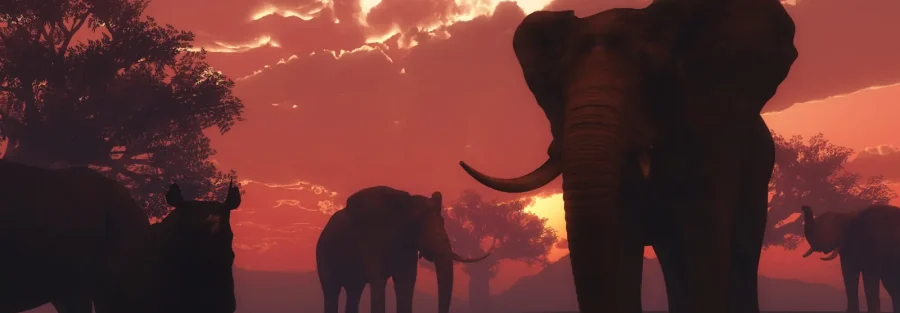
In this economic safari, the banking and financial services sector plays the role of the elephant. These are the large, stable, foundational animals whose weight and presence shape the terrain. Recent estimates show that at the start of 2025 there are about 5.7 million private‑sector businesses in the UK.
But within that vast number, only a small fraction is large. Just over eight thousand UK businesses have 250 or more employees. These “large beasts” contribute a substantial portion of business turnover and employment.
These financial “elephants” move with deliberation and caution. Their size gives them stability and influence. But size can also slow adaptation. As technology evolves rapidly, as consumer behavior shifts, as new competitors emerge, even elephants must evolve if they wish to remain relevant.
The Agile Hunters – Fintech and Digital Businesses as Cheetahs
If banks are elephants, fintech firms and digital-first businesses resemble cheetahs: fast, agile, opportunistic. The UK remains a centre of fintech activity. According to recent reports, fintech remains a dynamic and growing part of the financial landscape, pushing innovation in payments, lending, reg-tech, and digital banking.
These cheetahs thrive in niches. They reach underserved markets, launch solutions where gaps exist, and pivot quickly if conditions change. Their agility allows them to seize opportunities that large, traditional firms may miss.
Yet speed requires stamina. Rapid growth without sustainable business models or prudent risk management can lead to burnout. For cheetahs, success depends not just on sprinting ahead, but on endurance and adaptation.
The Countless Small Beasts – SMEs as Beetles and Small Mammals
The backbone of the UK economy is made up of small and medium sized enterprises (SMEs). As of 2024–2025, SMEs account for nearly 99.8 percent of all private‑sector businesses. Many of these enterprises are micro‑businesses or sole proprietorships. In 2025, approximately 4.3 million UK businesses do not employ anyone apart from the owner.
These businesses behave like swarms of beetles or small mammals scattered across the terrain. They are numerous, diverse, adaptive, and deeply embedded in local economies. They supply goods and services, they innovate at the grassroots level, they respond quickly to market changes.
Their sheer number gives the ecosystem depth. Even though individually they may lack scale, collectively they represent the bulk of business activity, employment, and entrepreneurial spirit in the UK.
The Cooperative Predators – Manufacturing and Export‑Oriented Firms as Wolves
Manufacturing and export‑heavy businesses act like wolves hunting in packs. According to recent data, there were around 269,000 manufacturing organisations in the UK operating in recent years. Many of these are small or medium‑size, yet they work within supply chains, networks, and collaborative structures.
Wolves hunt effectively only when they collaborate and coordinate. In the same way, manufacturing firms that integrate supply‑chain partners, maintain relationships, optimize operations, and adapt to global pressures tend to survive and thrive. Isolation can lead to failure.
Manufacturing wolves have faced serious challenges over decades: global competition, shifting trade relationships, regulatory changes, rising input costs, and shifting demand patterns. The fittest are those which collaborate, adapt, and innovate.
The New Evolving Species – Digital‑Native, Regulation‑Adapted Businesses
As we reach 2025, the business ecosystem does not just consist of older species. New species have emerged, reflecting regulatory change, digital transformation, and evolving business models.
Many small and medium enterprises have embraced digital tools and modern business practices. They behave like resilient beetles adapting to changing climates. These firms are embedded in cloud‑based software, digital accounting, e‑commerce, remote working tools, and flexible business structures.
At the same time, regulatory changes such as the rollout of modernized tax and compliance frameworks are shaping new behavior patterns. Firms that adapt to comply, that upgrade systems, that manage data and reporting effectively, develop traits akin to chameleons: changing colors, evolving, surviving in shifting regulatory climates.
Then there are fintech‑first and digital‑native companies using open banking, embedded finance, digital payments, and innovative business models. These operate like hawks or falcons: high‑altitude, far‑sighted, quick to strike opportunities, and agile across terrains.
This new generation of businesses embodies flexibility, resilience, and forward‑looking orientation. They may not yet match the scale of elephants or the stability of wolves. But they are shaping the future, defining how business will be done in a fast, digital, globalized economy.
What Safari Teaches Us
Viewing the UK business landscape as a living ecosystem with different species reveals structural truths about resilience, strength, adaptability, and diversity.
Stability and scale offer robustness. The elephants still anchor the system. Their influence remains. Their experience and capital give them authority.
Agility and innovation enable growth in fast-changing environments. The cheetahs and falcons demonstrate that speed, flexibility, and willingness to adapt open opportunities that legacy models might miss.
Collective strength in numbers maintains diversity and economic depth. The swarm of SMEs and networked manufacturing wolves show that mass, collaboration, and diversity are valuable.
Adaptation to new conditions, whether technological, regulatory, or driven by consumer preference, becomes critical. The newer species are proof that evolution is ongoing. Businesses that embrace change, adopt digital tools, comply with new frameworks, and pivot where needed have a better shot at surviving and thriving.
No single strategy wins everywhere. What works for a fintech startup may not work for a small retailer or a manufacturing firm. The terrain changes over time. The climate fluctuates. The predators and prey evolve.
The Future Is a New Generation of Creatures
As we move deeper into the 21st century, the safari evolves. We expect the emergence of further new species formed by technology, regulation, globalization, and social change.
AI‑native firms. Climate‑conscious businesses. Hybrid digital‑services companies. Global exporters with flexible remote teams. These might resemble creatures we have not even named yet.
Some current giants will learn new rhythms. Some agile newcomers will grow into tomorrow’s apex creatures. Others may struggle if they resist change. The business jungle will remain dynamic, competitive, and unpredictable.
For business leaders, policymakers, investors, and entrepreneurs the metaphor highlights one key principle. Success depends on matching strategy to environment. Whether you build for scale, speed, collaboration, or niche agility. Whether you aim for stability, flexibility, disruption, or community. Your “animal instincts” must align with the terrain you operate in.
Because in this safari, survival and success belong to those who adapt, evolve, and respect the shifting economic ecosystem.